
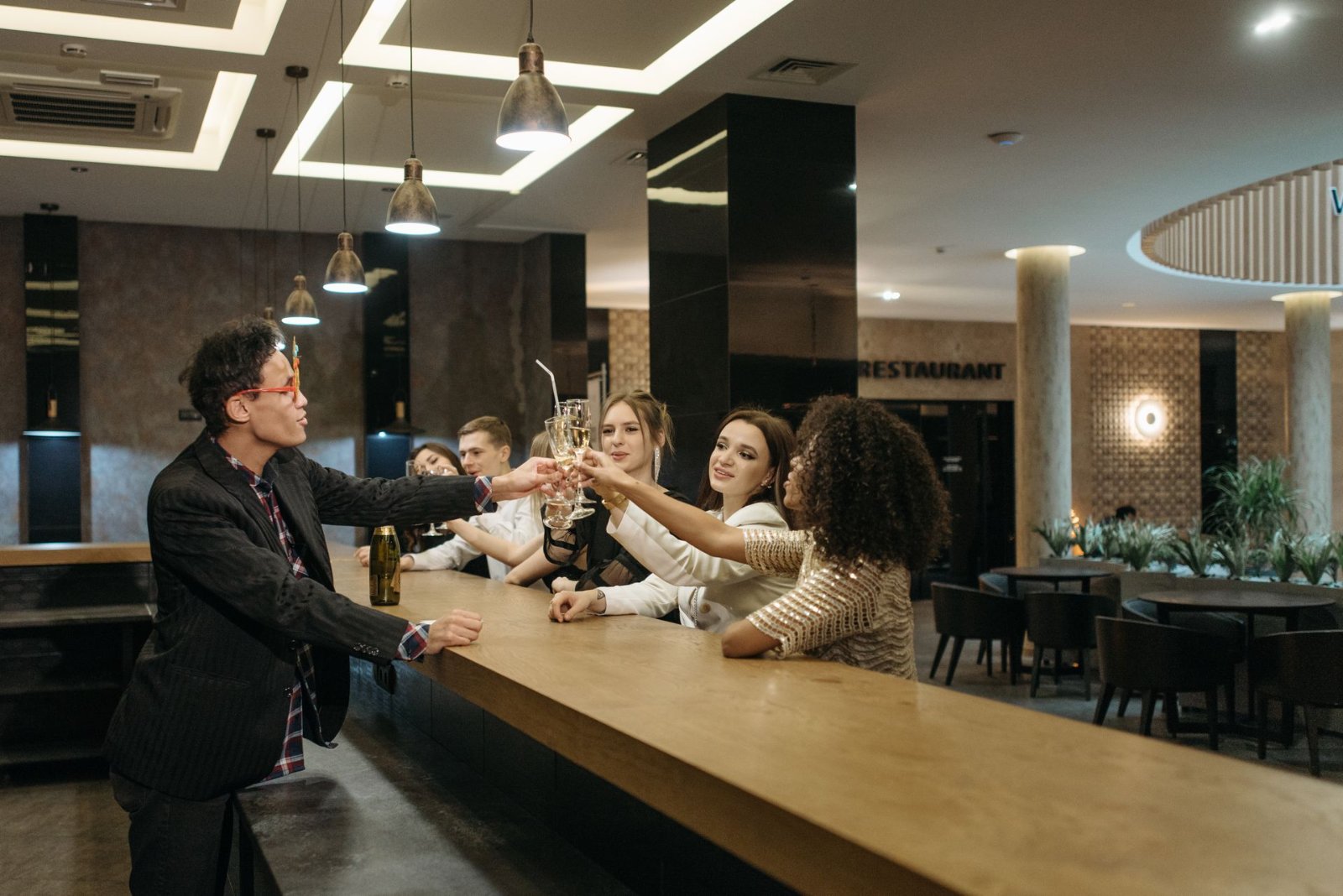
There’s something almost magical about a bar crawl. You start the evening as a loose group of acquaintances, coworkers, or strangers, and by the time you’ve hit your third or fourth venue, something has shifted. Conversations have deepened, inside jokes have formed, and a genuine sense of camaraderie has taken root. But is this just the effect of a few drinks, or is there something more scientifically profound happening beneath the surface?
As it turns out, the science of social psychology, neuroscience, and behavioral research all point to a fascinating conclusion: bar crawls and mobile social events are uniquely engineered — even if unintentionally — to accelerate social bonding and build mental resilience in ways that static social gatherings simply cannot replicate. In cities like Charlotte, NC, where the social scene is vibrant and community-driven, understanding this science can completely change how you think about your next night out.
Whether you’re planning a corporate team-building event, a birthday celebration, or simply looking for a way to deepen friendships, this article breaks down the hidden science behind why bar crawls work — and why companies like Barcrawlerz in Charlotte, NC are tapping into something far more powerful than just bar-hopping fun.
What Is a Bar Crawl, and Why Does Movement Matter?
A bar crawl, at its most basic, is a social event where participants visit multiple bars or venues in a single evening, moving from location to location as a group. Unlike a dinner party, a house party, or a seated gala, a bar crawl is defined by its mobility. And that mobility, as we’ll explore, is the secret ingredient that makes it so socially powerful.
Static social events — think office holiday parties, sit-down dinners, or cocktail hours — tend to anchor people in fixed positions. You find your seat, your corner, your comfort zone, and you stay there. The social dynamics are largely predetermined by seating arrangements, hierarchies, and the physical limitations of the space. Bar crawls shatter all of those constraints.
In Charlotte, NC, a city known for its thriving NoDa arts district, the energy of Uptown, and the laid-back charm of South End, bar crawls take on a particularly rich character. Moving through these neighborhoods isn’t just logistically interesting — it’s emotionally stimulating in ways that matter deeply to how we connect with one another.
The Neuroscience of Novelty: Why New Environments Accelerate Bonding
One of the most compelling scientific explanations for why bar crawls work comes from neuroscience — specifically, the brain’s response to novelty. Every time you enter a new environment, your brain releases dopamine, the neurotransmitter associated with reward, motivation, and pleasure. This dopamine surge doesn’t just make you feel good; it primes your brain for social engagement and memory formation.
Dopamine, Shared Experiences, and Social Memory
When a group of people experiences a novel environment together, they share a dopamine response. This shared neurochemical state is one of the foundational mechanisms behind social bonding. Research published in journals like Neuron and Social Cognitive and Affective Neuroscience has shown that shared emotional and physiological states create stronger interpersonal bonds than neutral, static interactions.
In plain terms: when you and your friends walk into a new bar together and collectively experience the excitement of a new space — the music, the décor, the vibe — your brains are literally synchronizing. This synchronization creates what researchers call “neural coupling,” a state in which the brain activity of two people begins to mirror each other. Neural coupling has been directly linked to better communication, increased empathy, and stronger feelings of connection.
A bar crawl, by design, creates multiple opportunities for this dopamine-driven neural coupling throughout a single evening. Each new venue is a fresh neurochemical reset, keeping the brain engaged and socially open in a way that a single static venue simply cannot sustain over several hours.
The Role of Anticipation in Social Cohesion
There’s another layer to the novelty effect: anticipation. Between venues during a bar crawl, the group is in transit — walking, ridesharing, or navigating the streets of Charlotte together. During this transitional time, people naturally discuss where they’re headed, what they expect, and what they thought of the last place. This shared anticipation is a powerful bonding mechanism.
Psychologists refer to this as “shared future orientation” — the act of collectively looking forward to a shared experience. Studies in social psychology have shown that groups who engage in shared future orientation report higher levels of trust, cooperation, and cohesion than groups who do not. The simple act of walking from one bar to the next in Charlotte’s South End, speculating about what the next spot will be like, is doing serious social work beneath the surface.
Social Identity Theory and the Power of Group Movement
Beyond neuroscience, social psychology offers another compelling framework for understanding why bar crawls build stronger bonds than static events. Social Identity Theory, developed by Henri Tajfel and John Turner in the 1970s and still widely applied today, suggests that people derive a significant portion of their self-concept from the groups they belong to.
When a group moves together through space — navigating the streets of Charlotte’s NoDa neighborhood, for instance — they are engaging in what sociologists call “collective locomotion.” This shared physical movement reinforces group identity in a deeply primal way. Humans evolved as social animals who moved together for survival, and our brains still respond to collective movement as a signal of group cohesion and shared purpose.
How Bar Crawls Create Shared Narratives
One of the most underappreciated aspects of bar crawls is their narrative structure. Unlike a static event, a bar crawl has a beginning, a middle, and an end. It has chapters — each venue representing a distinct episode in a shared story. This narrative arc is psychologically significant.
Research in cognitive psychology has shown that humans are fundamentally story-driven creatures. We organize our memories and identities around narratives, and we bond most deeply with people who share our stories. A bar crawl, almost uniquely among social events, creates a rich, multi-chapter narrative in a single evening. By the end of the night, the group has a shared story: “Remember when we got to that rooftop bar in Uptown and the view was incredible?” or “That speakeasy in South End was absolutely wild.”
These shared narrative memories become the social glue that holds groups together long after the evening is over. They become the references, the inside jokes, and the touchstones that define the group’s identity. Static events, which unfold in a single location with minimal variation, produce far fewer of these memorable narrative moments.
“Shared experiences, especially those involving novelty, movement, and mild challenge, are among the most powerful catalysts for social bonding that human psychology has identified. Bar crawls check every one of these boxes.”
The Psychology of Mild Challenge: Why Navigating the Unknown Builds Resilience
Here’s where the science gets particularly interesting. Bar crawls don’t just build social bonds — they also build mental resilience, and the mechanism behind this is rooted in what psychologists call “optimal challenge theory” or the concept of “eustress” (positive stress).
Eustress and the Social Brain
Not all stress is bad. Eustress — the kind of positive, manageable challenge that keeps you engaged and alert — has been shown to enhance cognitive function, improve mood, and strengthen social bonds. The mild logistical challenges of a bar crawl — figuring out where to go next, navigating an unfamiliar neighborhood, managing a group of people with different preferences — create just enough eustress to activate the brain’s social engagement systems without triggering the fight-or-flight response.
In Charlotte, NC, this effect is amplified by the city’s diverse and dynamic social landscape. Navigating from the craft cocktail bars of Plaza Midwood to the live music venues of NoDa to the sleek rooftop spots of Uptown is genuinely stimulating. The group has to communicate, cooperate, and make collective decisions — all of which are exercises in social intelligence and resilience.
How Shared Challenges Deepen Trust
Trust is the foundation of any meaningful social bond, and research consistently shows that shared challenges are one of the most effective trust-building mechanisms available. When a group navigates mild adversity together — even something as simple as a long walk in the rain between bars or a venue that didn’t quite live up to the hype — they emerge from the experience with a stronger sense of mutual reliance and trust.
This is the same principle that underlies military bonding, sports team cohesion, and wilderness therapy programs. The context is obviously different in a bar crawl setting, but the underlying psychological mechanism is remarkably similar. Shared challenge creates shared identity, and shared identity creates resilience — both individual and collective.
The Role of Alcohol: Social Lubricant or Social Catalyst?
It would be intellectually dishonest to discuss bar crawls without addressing the role of alcohol. The truth is nuanced: alcohol does play a role in the social dynamics of bar crawls, but it is far from the primary driver of the bonding effects we’ve been discussing. In fact, research suggests that the social and environmental factors we’ve already covered are far more significant than alcohol consumption itself.
What the Research Actually Says
A landmark study published in the journal Adaptive Human Behavior and Physiology found that the social bonding effects of drinking together were primarily driven by the shared social context and the release of endorphins through laughter and positive social interaction — not by the pharmacological effects of alcohol per se. The study found that even in groups where some participants consumed non-alcoholic beverages, the bonding effects were largely preserved when the social context was rich and engaging.
This is an important finding for several reasons. First, it suggests that the design of the social experience — the movement, the novelty, the shared narrative — matters far more than the alcohol content. Second, it opens the door for inclusive bar crawl experiences that accommodate non-drinkers without sacrificing the social benefits. Many Charlotte bar crawl organizers, including Barcrawlerz, have recognized this and work to create experiences that are genuinely inclusive and enjoyable for participants regardless of their drinking preferences.
Responsible Social Design and Mental Wellbeing
It’s also worth noting that the mental resilience benefits of bar crawls are most pronounced when the event is thoughtfully designed and responsibly managed. Excessive alcohol consumption can undermine the very social and cognitive benefits we’ve been discussing, impairing memory formation, reducing emotional regulation, and increasing the likelihood of negative social interactions.
The best bar crawl experiences — and the ones that produce the most lasting social and psychological benefits — are those that prioritize the experiential and social elements over pure alcohol consumption. This is a philosophy that well-designed bar crawl companies in Charlotte embrace, focusing on the journey, the venues, the people, and the shared experience rather than simply the drinking.
Bar Crawls vs. Static Social Events: A Side-by-Side Comparison
To fully appreciate the science we’ve been exploring, it’s worth laying out a direct comparison between bar crawls and static social events across the key dimensions of social bonding and mental resilience.
Novelty and Environmental Stimulation
Static events offer a single environment, which means a single dopamine hit at the start of the evening that gradually fades as the brain habituates to the surroundings. Bar crawls offer multiple environments, each providing a fresh dopamine response and keeping the brain in a state of engaged novelty throughout the evening. Advantage: bar crawls.
Narrative Richness and Memory Formation
Static events produce a single-chapter narrative with limited variation. Bar crawls produce multi-chapter narratives with distinct episodes, unexpected moments, and rich sensory variety. The resulting memories are more vivid, more emotionally resonant, and more socially significant. Advantage: bar crawls.
Social Mixing and Relationship Breadth
Static events tend to reinforce existing social clusters. People gravitate toward those they already know and stay in fixed positions throughout the evening. Bar crawls, by virtue of their movement and the natural reshuffling that occurs between venues, encourage social mixing and the formation of new connections. Advantage: bar crawls.
Collective Challenge and Trust Building
Static events offer minimal collective challenge beyond the social interaction itself. Bar crawls introduce a layer of shared logistical and navigational challenge that activates trust-building mechanisms and reinforces group cohesion. Advantage: bar crawls.
Flexibility and Inclusivity
This is an area where static events may have an advantage for certain populations, particularly those with mobility challenges or social anxiety. However, well-designed bar crawls can accommodate a wide range of needs and preferences, and the structured social context of a bar crawl can actually be less intimidating for socially anxious individuals than the open-ended, unstructured nature of a cocktail party or networking event. Advantage: context-dependent, but bar crawls are more adaptable than commonly assumed.
Charlotte, NC: The Perfect City for Science-Backed Social Experiences
Charlotte is a city that seems almost purpose-built for the kind of social experiences we’ve been discussing. Its diverse neighborhoods offer a rich tapestry of environments, each with its own distinct character, aesthetic, and social energy. Moving through Charlotte on a bar crawl is genuinely stimulating in ways that few other cities can match.
The Neighborhoods That Make Charlotte Bar Crawls Unique
NoDa, Charlotte’s arts and culture district, offers an eclectic mix of live music venues, craft beer bars, and creative cocktail spots. The energy here is bohemian and vibrant, attracting a creative crowd and offering the kind of sensory richness that maximizes the novelty effects we’ve discussed. Uptown Charlotte, the city’s urban core, offers sleek rooftop bars, sophisticated cocktail lounges, and a skyline that provides a genuinely breathtaking backdrop for social experiences. South End combines the best of both worlds, with a mix of trendy craft breweries, stylish bars, and a walkable, pedestrian-friendly streetscape that makes the between-venue transitions feel like part of the experience rather than an interruption.
Plaza Midwood adds yet another dimension — a neighborhood with genuine character and a fiercely independent spirit, home to dive bars, eclectic cocktail spots, and a social scene that feels authentically Charlotte in a way that few other areas can claim.
Why Barcrawlerz Is Tapping Into Something Real
Barcrawlerz, one of Charlotte’s premier bar crawl organizers, has built its reputation on understanding what makes a bar crawl genuinely great rather than just logistically functional. By carefully curating routes through Charlotte’s most vibrant neighborhoods, managing group dynamics, and creating a structured experience that maximizes the social and experiential benefits we’ve been discussing, Barcrawlerz is essentially applying the science of social bonding in a practical, accessible, and genuinely fun format.
Whether it’s a themed crawl through Uptown Charlotte, a craft beer tour of South End, or a holiday event that brings together coworkers, friends, and strangers, Barcrawlerz understands that the magic of a bar crawl isn’t just in the bars — it’s in the movement, the shared experience, the unexpected moments, and the stories that participants carry with them long after the evening is over.
“The best bar crawls aren’t about drinking. They’re about moving through a city with people you care about — or people you’re about to care about — and letting the experience do what human experience has always done: bring people together.”
Practical Applications: Using Bar Crawl Science for Real-World Social Goals
Understanding the science behind bar crawls isn’t just academically interesting — it has real practical implications for how we design social experiences in our personal and professional lives.
Corporate Team Building: Beyond the Boardroom
Corporate team building has a reputation problem. Forced icebreakers, awkward trust falls, and generic activities that nobody actually enjoys have made many employees deeply skeptical of team-building events. Bar crawls offer a genuinely effective alternative, and the science backs this up.
The combination of shared novelty, collective challenge, social mixing, and narrative richness that characterizes a well-designed bar crawl maps almost perfectly onto the psychological conditions that research has identified as most conducive to team cohesion and trust. Companies in Charlotte, NC that have incorporated structured bar crawl experiences into their team-building programs consistently report higher levels of post-event social connection and improved workplace communication.
Building New Social Networks in a New City
For newcomers to Charlotte — and the city has been growing rapidly, attracting residents from across the country — bar crawls offer one of the most efficient and enjoyable ways to build a social network from scratch. The structured social context of a bar crawl reduces the anxiety of cold social interactions, the movement creates natural conversation opportunities, and the shared experience provides an instant foundation for future social connections.
If you’ve recently moved to Charlotte and are looking to build genuine friendships rather than superficial acquaintances, joining a structured bar crawl experience with an organization like Barcrawlerz is one of the most scientifically sound social strategies available to you.
Mental Health and Social Resilience: The Bigger Picture
The mental health implications of what we’ve been discussing are significant and worth addressing directly. Social isolation and loneliness have been identified by public health researchers as among the most serious mental health challenges of our era. The surgeon general of the United States has declared loneliness a public health epidemic, and the research on the mental health consequences of social isolation is alarming.
In this context, the social bonding and resilience-building effects of bar crawls take on a deeper significance. Activities that genuinely strengthen social bonds, create lasting shared memories, and build the kind of trust and mutual reliance that characterizes healthy social networks are not trivial — they are genuinely important contributions to mental health and wellbeing.
This doesn’t mean that bar crawls are a substitute for professional mental health support or that alcohol consumption is a mental health strategy. But it does mean that intentional, well-designed social experiences that leverage the psychological mechanisms we’ve discussed are meaningful investments in mental wellbeing — and that bar crawls, done right, qualify as exactly that kind of experience.
Tips for Maximizing the Social and Psychological Benefits of Your Next Bar Crawl
Armed with the science, here are some practical recommendations for getting the most out of your next bar crawl experience in Charlotte or anywhere else.
Embrace the Movement
Don’t rush the between-venue transitions. The walking, the navigating, the collective decision-making — this is where much of the bonding actually happens. Resist the urge to jump straight into the next venue and instead allow the group to breathe, talk, and enjoy the city around them.
Mix Up the Social Groupings
Consciously resist the tendency to stay in the same conversational cluster throughout the evening. At each new venue, make an effort to talk to different members of the group. This social mixing is one of the key mechanisms through which bar crawls build broader and deeper social networks.
Be Present and Attentive to the Environment
One of the benefits of a bar crawl is the sensory richness of moving through multiple environments. Put your phone down occasionally and actually take in the space — the music, the décor, the atmosphere. This environmental attentiveness enhances the novelty effect and creates richer memories.
Reflect on the Experience
At the end of the evening, or in the days following, take a few minutes to reflect on the experience — what stood out, what surprised you, what connections felt meaningful. This reflective practice enhances memory consolidation and reinforces the social bonds formed during the evening.
Choose Your Organizer Wisely
The quality of the bar crawl experience depends enormously on how it’s organized. A well-curated route, thoughtful venue selection, and experienced facilitation make a significant difference in the social and psychological outcomes of the event. In Charlotte, organizations like Barcrawlerz have invested in understanding what makes a bar crawl genuinely great, and partnering with experienced organizers is one of the best investments you can make in the quality of your social experience.
Conclusion: The Science Is Clear — Bar Crawls Are More Than Just Fun
The hidden science behind bar crawls is, in many ways, the science of what makes us human. We are social animals who thrive on novelty, shared experience, collective challenge, and narrative. Bar crawls, almost uniquely among modern social formats, engage all of these dimensions simultaneously and in a way that is genuinely enjoyable, accessible, and repeatable.
In Charlotte, NC — a city defined by its energy, its diversity, and its deep sense of community — bar crawls are more than just a way to see the nightlife. They are, when done right, a powerful tool for building the kinds of social bonds and mental resilience that contribute to genuine wellbeing and a richer, more connected life.
The next time someone suggests a bar crawl and you find yourself wondering if it’s worth the effort, remember the science. Remember the dopamine, the neural coupling, the shared narratives, the eustress, the trust-building. Remember that what feels like a fun night out is actually one of the most sophisticated social technologies that human culture has produced — and that organizations like Barcrawlerz in Charlotte are helping people access its benefits every week.
So lace up your walking shoes, gather your people, and hit the streets of Charlotte. The science says you’ll be better for it — and we’re willing to bet you’ll have a great time finding out.